The ecumene (from the Greek οἰκουμένη, oikouménē, «inhabited land») is the entire world known by a culture. It is generally distinguished as that portion of the Earth that is permanently inhabited, as opposed to the anecumene or uninhabited or temporarily occupied areas. During the Hellenistic period, ecumene referred to the part of the Earth that was inhabited, either by all of humanity or just a subset of it. It frequently referred to the lands inhabited by the Greeks, excluding those that were occupied by the barbarians. In the Koine of the Roman Empire and the New Testament, ecumene literally means world; however, it was generally understood to refer to the Roman world.
It is clear that with the implementation of the Web, habitat issues have expanded towards the digital medium, creating from the expansion of the habitable territory a controversy about the characteristics of the web surfer. Until today, the web had been understood as an anecumene, that is, a temporarily occupied environment, but the German psychologist Peter Kruse presents us with a new vision of the Internet and its inhabitants. Kruse, who for years has been investigating the social repercussions of the new Web 2.0, assures that a split is taking place in the digital society born in the heat of the Internet. The network is a territory inhabited by two completely different groups of people: digital visitors and digital residents. While the former resort to technological media occasionally, technological residents who communicate through Twitter and WhatsApp and stay informed through apps never leave the digital world, inhabiting it constantly. Thus, while visitors are still able to distinguish the “real” world from the digital one, residents no longer distinguish the border that separates both worlds.
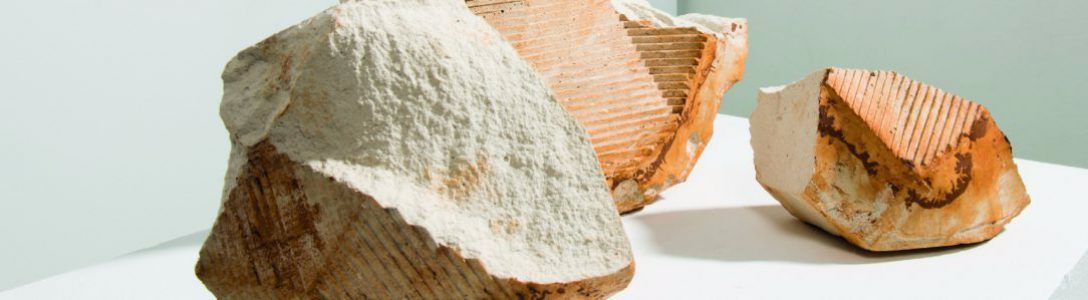
This project addresses these new habitat issues through artistic research, in this case in the border zone between art, science and technology. The process arises from the interpretation and analysis of the source code of web pages (these are the orders that our computers follow each time we browse a web page), using this code as a reflected wave or echo coming from an object or physical space, a process that resembles the SONAR navigation technique. To do this, with the help of computer engineer Marcos Bernabé I have developed analysis software that interprets each of the lines of code, creating displacement maps from web pages. These maps are dumped on 3D surfaces, shaping the network and creating geo-morphological models that are subsequently developed using different digital manufacturing techniques such as 3D printers or CNC milling machines (in their sculptural aspect) or in the development of Reality environments. Virtual (Unity3D). In this way, we reflect on the materializing processes and the new places to which they give rise: natural or simply artificial environments capable of creating sensations. In short, it is a process that gives physical form to the “new inhabited territory”, underlining the overlap that already exists between the physical inhabitant and the virtual inhabitant.

